The Best Damn Pork Chops You’ll Ever Make
I ruined pork chops for years. Dry, gray, chewy disasters that my family ate out of politeness, not enjoyment. Then I learned two things that changed everything, and now people actually ask me for this recipe.
This pork chop recipe relies on bone-in pork chops, a proper sear, and a butter baste that keeps everything juicy instead of sad and leathery. Bone-in matters here, and I’ll explain exactly why in a minute. This is genuinely the method that turned me from someone who dreaded pork chops into someone who requests them.
What You’ll Need (Ingredients)
Simple, accessible ingredients that do a lot of heavy lifting once you get the technique right.
For the pork chops:
- 4 bone-in pork chops, about 1 to 1.25 inches thick
- 2 tablespoons olive oil
- 1 teaspoon salt
- 1/2 teaspoon black pepper
- 1 teaspoon garlic powder
- 1/2 teaspoon onion powder
- 1/2 teaspoon paprika
- 3 tablespoons unsalted butter
- 3 cloves garlic, smashed
- 2 sprigs fresh rosemary or thyme
Optional brine:
- 4 cups water
- 1/4 cup kosher salt
- 2 tablespoons brown sugar
How to Make It — Full Step-by-Step Process
Step One: Brine the Chops, If You Have Time
Dissolve 1/4 cup of kosher salt and 2 tablespoons of brown sugar into 4 cups of water in a large bowl or container. Submerge the 4 bone-in pork chops completely and refrigerate for 30 minutes to 1 hour. This step is optional but genuinely worth doing, since brining helps the meat retain moisture throughout cooking.
If you’re short on time, skip the brine entirely and move straight to seasoning. The chops still turn out well without it, just slightly less insurance against any accidental overcooking later in the process.
Step Two: Pat Dry and Season Generously
Remove the chops from the brine if using, and pat them completely dry with paper towels on both sides. This drying step matters more than people expect, since a wet surface steams in the pan instead of browning properly. A dry surface is what creates that deep, golden sear everyone wants.
Mix 1 teaspoon of salt, 1/2 teaspoon of black pepper, 1 teaspoon of garlic powder, 1/2 teaspoon of onion powder, and 1/2 teaspoon of paprika together in a small bowl. Rub this seasoning blend generously over both sides of each chop, pressing gently so it adheres well to the surface.
Step Three: Sear Over High Heat
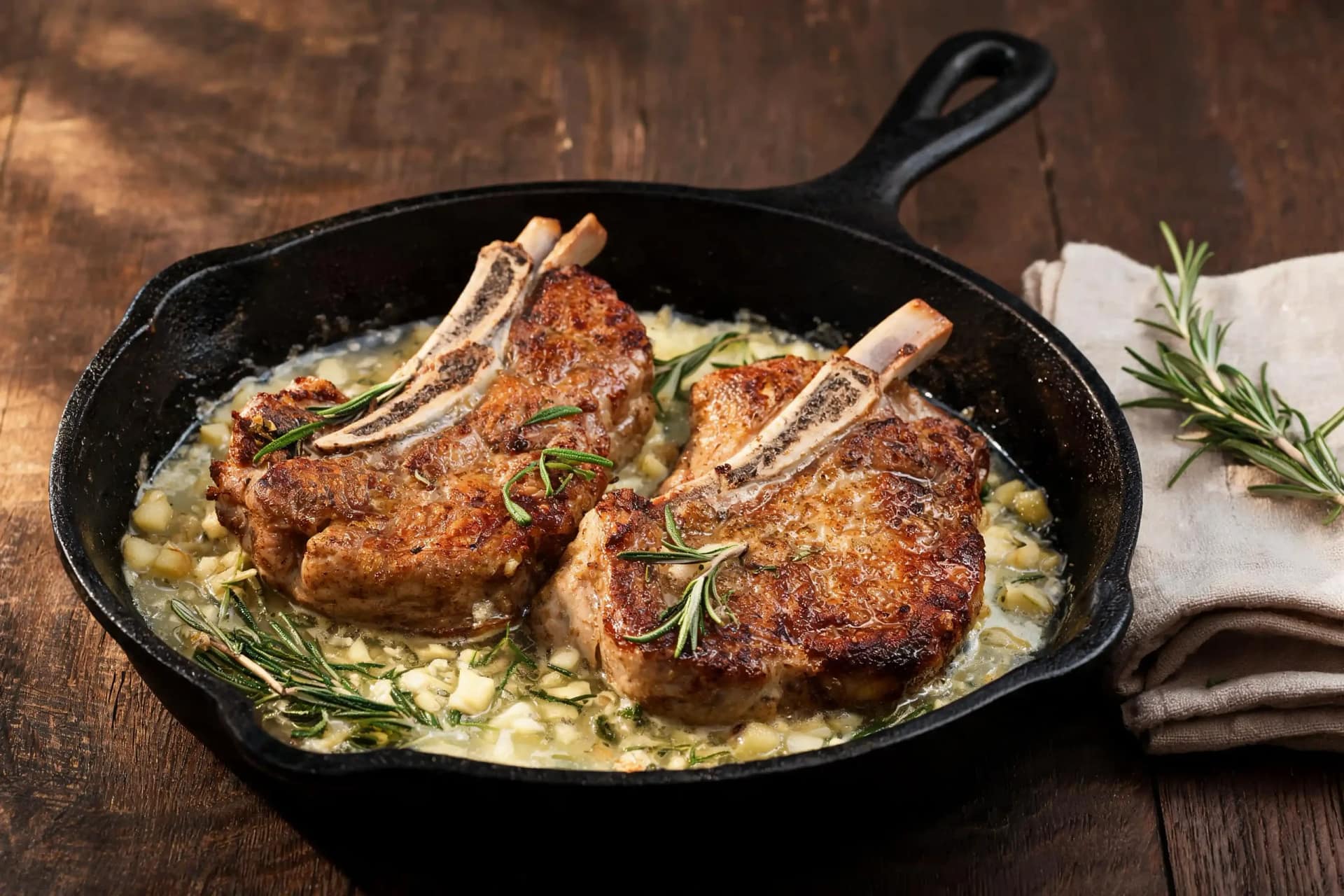
Heat 2 tablespoons of olive oil in a large cast iron skillet or heavy-bottomed pan over medium-high heat until it shimmers and looks visibly hot. Carefully place the seasoned chops into the hot pan, making sure not to overcrowd them, since overcrowding traps steam and prevents proper browning.
Sear without moving the chops for 3 to 4 minutes per side, until a deep golden-brown crust forms. Have you ever flipped meat too early out of impatience and ended up with a pale, unappetizing surface instead of a proper crust? Resist that urge here completely.
Step Four: Baste With Garlic Butter
Reduce the heat to medium and add 3 tablespoons of butter, the 3 smashed garlic cloves, and 2 sprigs of fresh rosemary or thyme directly into the pan. Let the butter melt completely around the chops, which takes about 30 seconds once the pan temperature settles.
Tilt the pan slightly and use a large spoon to continuously baste the melted, garlic-and-herb-infused butter over the tops of the chops for about 2 minutes. This basting technique adds flavor while keeping the meat moist, and FYI, it’s genuinely the step that separates these from your average pan-fried pork chop.
Step Five: Check Temperature and Rest
Insert an instant-read meat thermometer into the thickest part of a chop, avoiding the bone, and check for an internal temperature of 145°F. Pull the chops from the heat right at this temperature, since pork continues cooking slightly from residual heat even after you remove it from the pan.
Transfer the chops to a cutting board or plate and let them rest for 5 minutes before cutting into them. Don’t skip this resting period, since cutting too early lets all those juices run straight onto the cutting board instead of staying inside the meat where they belong.
Why Bone-In Pork Chops Win
Have you ever wondered why so many chefs specifically call for bone in pork chops instead of boneless? The bone genuinely makes a measurable difference in both flavor and texture.
The bone conducts heat slightly differently than the surrounding meat, which helps protect the meat closest to it from overcooking as fast. Bone-in chops also tend to hold more moisture throughout cooking and carry a richer, slightly more developed flavor from the bone marrow and connective tissue nearby. IMO, once you taste a properly cooked bone-in chop next to a boneless one, the difference becomes obvious immediately.
Turning This Into a Full Meal
Meals With Pork Chops
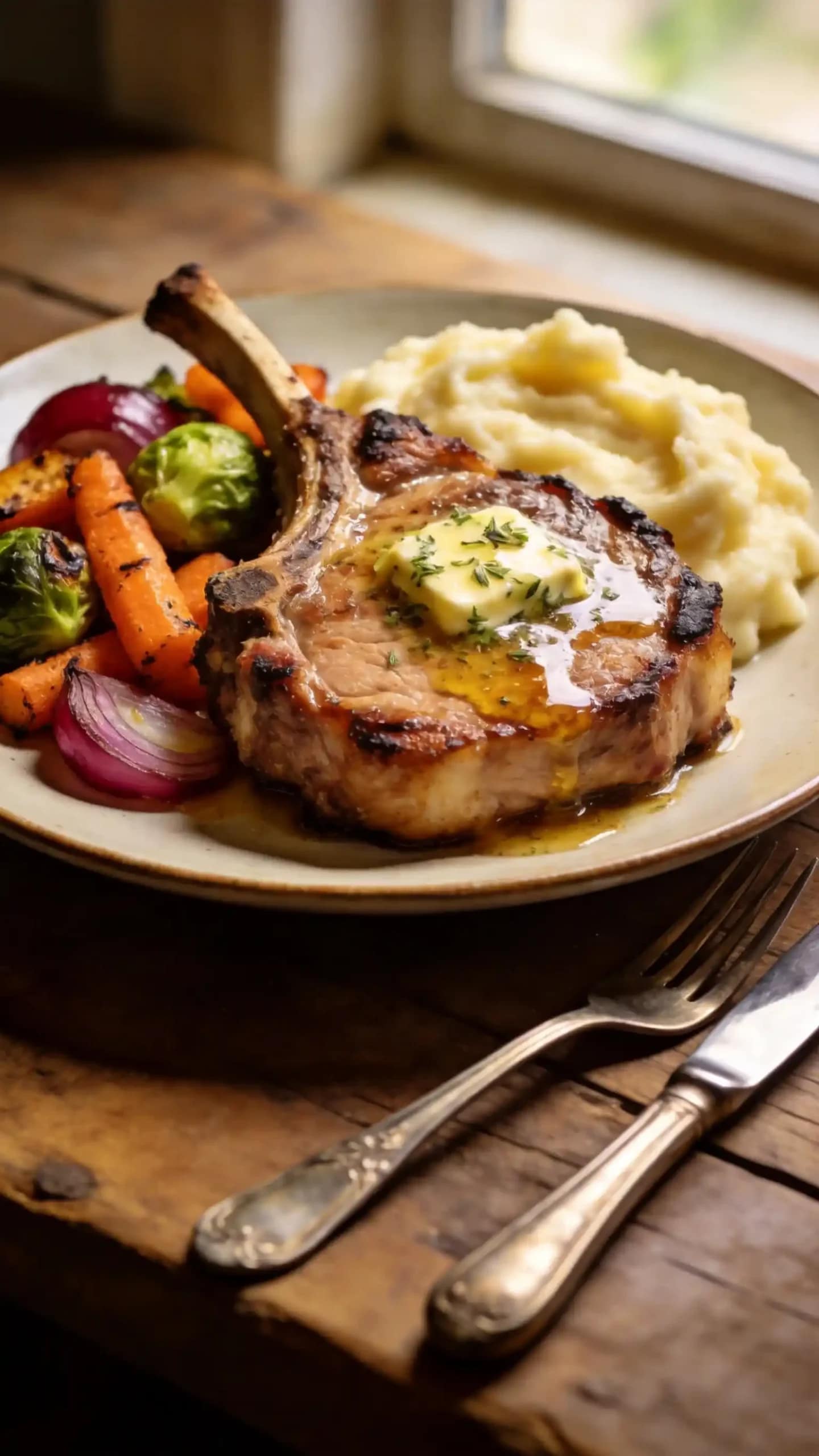
Pair these chops with roasted vegetables, mashed potatoes, or a simple green salad for an easy weeknight dinner. The garlic herb butter from the pan works beautifully drizzled over roasted potatoes or steamed green beans as a quick, zero-extra-effort sauce.
Pork Chop Casserole Option
For a heartier, make-ahead version, slice the cooked chops and layer them into a baking dish with sliced potatoes, a creamy sauce, and shredded cheese for a pork chop casserole. Bake at 375°F for 25 to 30 minutes until bubbling and golden on top, and you’ve got a completely different meal from the same base recipe.
Quick Porkchops Dinner Ideas
For genuinely easy porkchops dinner ideas easy recipes on a busy night, serve the chops sliced over a bed of rice with the pan sauce spooned on top. This stretches the dish further and turns it into something that feels more substantial without much extra effort.
Common Mistakes to Avoid
Skipping the pat-dry step: Wet meat steams instead of searing properly in the pan. Always dry chops thoroughly with paper towels before seasoning and cooking.
Overcrowding the pan: Too many chops at once traps steam and prevents that golden crust from forming. Cook in batches if your pan isn’t large enough to fit everything with space between pieces.
Cooking past 145°F: Overcooked pork turns dry, tough, and chewy almost instantly. Use a meat thermometer rather than guessing by color or time alone.
Skipping the rest period: Cutting into chops immediately releases all the juices onto the board instead of keeping them in the meat. Five minutes of patience genuinely changes the final texture.

The Best Damn Pork Chops You’ll Ever Make
4
servings10
minutes15
minutesThese bone-in pork chops get a generous spice rub, a proper sear in a hot skillet, and a garlic herb butter baste for maximum juiciness and flavor. Pulled at 145°F and rested before serving, they deliver a genuinely restaurant-quality dinner in just 25 minutes with minimal ingredients required.
Ingredients
For the pork chops:
4 bone-in pork chops, about 1 to 1.25 inches thick
2 tablespoons olive oil
1 teaspoon salt
1/2 teaspoon black pepper
1 teaspoon garlic powder
1/2 teaspoon onion powder
1/2 teaspoon paprika
3 tablespoons unsalted butter
3 cloves garlic, smashed
2 sprigs fresh rosemary or thyme
Optional brine:
4 cups water
1/4 cup kosher salt
2 tablespoons brown sugar
Directions
- Dissolve kosher salt and brown sugar into water and submerge the pork chops for 30 minutes to 1 hour, if brining
- Remove chops from brine and pat completely dry with paper towels
- Mix salt, black pepper, garlic powder, onion powder, and paprika together
- Rub the seasoning blend generously over both sides of each chop
- Heat olive oil in a cast iron skillet over medium-high heat until shimmering
- Sear chops for 3 to 4 minutes per side without moving them, until golden brown
- Reduce heat to medium and add butter, smashed garlic, and rosemary or thyme to the pan
- Baste the melted butter over the chops continuously for about 2 minutes
- Check internal temperature with a meat thermometer and remove at 145°F
- Rest the chops for 5 minutes before serving
FAQs
Q1: What makes these the best damn pork chops?
The combination of a proper sear, bone-in cut, and butter basting technique produces a deeply flavorful crust while keeping the inside genuinely juicy. Most dry, disappointing pork chops come from overcooking or skipping the sear entirely, both of which this method directly addresses.
Q2: Can I use boneless pork chops instead?
Yes, though boneless chops cook slightly faster and can dry out more easily without the bone’s protective effect. Reduce the sear time by about 1 minute per side and watch the internal temperature closely.
Q3: What’s the ideal pork chop thickness for this recipe?
Chops between 1 and 1.25 inches thick work best for this searing and basting method. Thinner chops cook too fast for a proper crust to develop and risk drying out before browning.
Q4: Do I really need to brine the chops first?
Brining is optional but genuinely helps with moisture retention, especially for leaner cuts. If you’re working with thicker, well-marbled chops, skipping the brine still produces a good result.
Q5: What temperature is pork actually safe to eat at?
The USDA recommends an internal temperature of 145°F followed by a 3-minute rest, which results in pork that’s safely cooked but still tender and slightly pink in the center. This is notably lower than older recommendations, so don’t overcook out of outdated caution.
Q6: What are some good pork recipes for dinner beyond this one?
Pork tenderloin, pulled pork, and pork stir-fry all make excellent additions to a weekly dinner rotation alongside this chop recipe. Keeping a few different pork cuts and cooking methods on hand genuinely helps avoid dinner fatigue.
Wrapping It Up
This pork chop recipe finally solves the dry, disappointing chop problem through proper drying, a real sear, and a butter baste that keeps everything juicy. Choose bone-in chops, dry them thoroughly, sear without moving them too soon, and pull them at 145°F. Those habits make the difference between a forgettable dinner and the best pork chops ever in your regular rotation.
Whether you serve these simply with vegetables or turn leftovers into a casserole the next night, this method delivers every single time. Now go grab that cast iron skillet and stop settling for dry pork chops.