Mediterranean Tzatziki Sauce From Scratch at Home
I started making home made tzatziki sauce during a phase where I was eating a lot of sad desk lunches and needed something to make vegetables feel less like a punishment. It worked. It worked so well that I now make a batch every week without exception.
This tzatziki sauce recipe produces a thick, creamy, garlicky, herb-forward sauce that improves every single thing it touches. You need five minutes of active prep, a good Greek yogurt, and the willingness to grate a cucumber, which is less dramatic than it sounds. This genuinely beats every store-bought version at every price point.
What You’ll Need (Ingredients)
Clean, fresh, and entirely accessible ingredients that combine into something far greater than the individual parts suggest.
For the tzatziki:
- 1 cup full-fat Greek yogurt
- 1 medium cucumber, about 1 cup grated
- 2 cloves garlic, minced or grated
- 2 tablespoons fresh dill, finely chopped
- 1 tablespoon fresh mint, finely chopped, optional
- 2 tablespoons fresh lemon juice
- 1 tablespoon extra virgin olive oil
- 1/2 teaspoon salt, plus more to taste
- 1/4 teaspoon black pepper
Optional garnish:
- extra drizzle of olive oil
- fresh dill sprigs
- pinch of paprika or sumac
How to Make It — Full Step-by-Step Process
Step One: Prepare and Drain the Cucumber
Wash the cucumber and grate it coarsely using a box grater directly into a clean kitchen towel or several layers of paper towel. English cucumbers work best here since they contain fewer seeds and less water than regular cucumbers, but standard cucumbers work perfectly well if that’s what you have.
Gather the towel around the grated cucumber and squeeze firmly over the sink, twisting the towel tighter as you go, for about 30 to 45 seconds. This step removes excess moisture that would otherwise make your tzatziki thin and watery within minutes of assembling it. Squeeze more aggressively than you think necessary, since cucumbers release a surprising amount of liquid.
Step Two: Prepare the Garlic
Peel and mince 2 cloves of garlic as finely as possible using a sharp knife, or grate them directly on a fine microplane grater for an even smoother distribution throughout the sauce. Grated garlic blends into the yogurt more evenly than minced garlic and produces a more uniform flavor in every bite rather than occasional intense garlic pockets.
Have you ever bitten into a tzatziki from a restaurant and found the garlic level wildly inconsistent from one spoonful to the next? That’s a mincing problem rather than a recipe problem. Grating genuinely solves it with about 10 extra seconds of effort.
Step Three: Combine the Base Ingredients
Add 1 cup of full-fat Greek yogurt to a medium mixing bowl. Full-fat Greek yogurt produces the thickest, creamiest, most authentic result in this tsiki sauce recipe Greek style, since reduced-fat versions contain more water and produce a noticeably thinner sauce that spreads less well and loses its texture quickly after refrigerating.
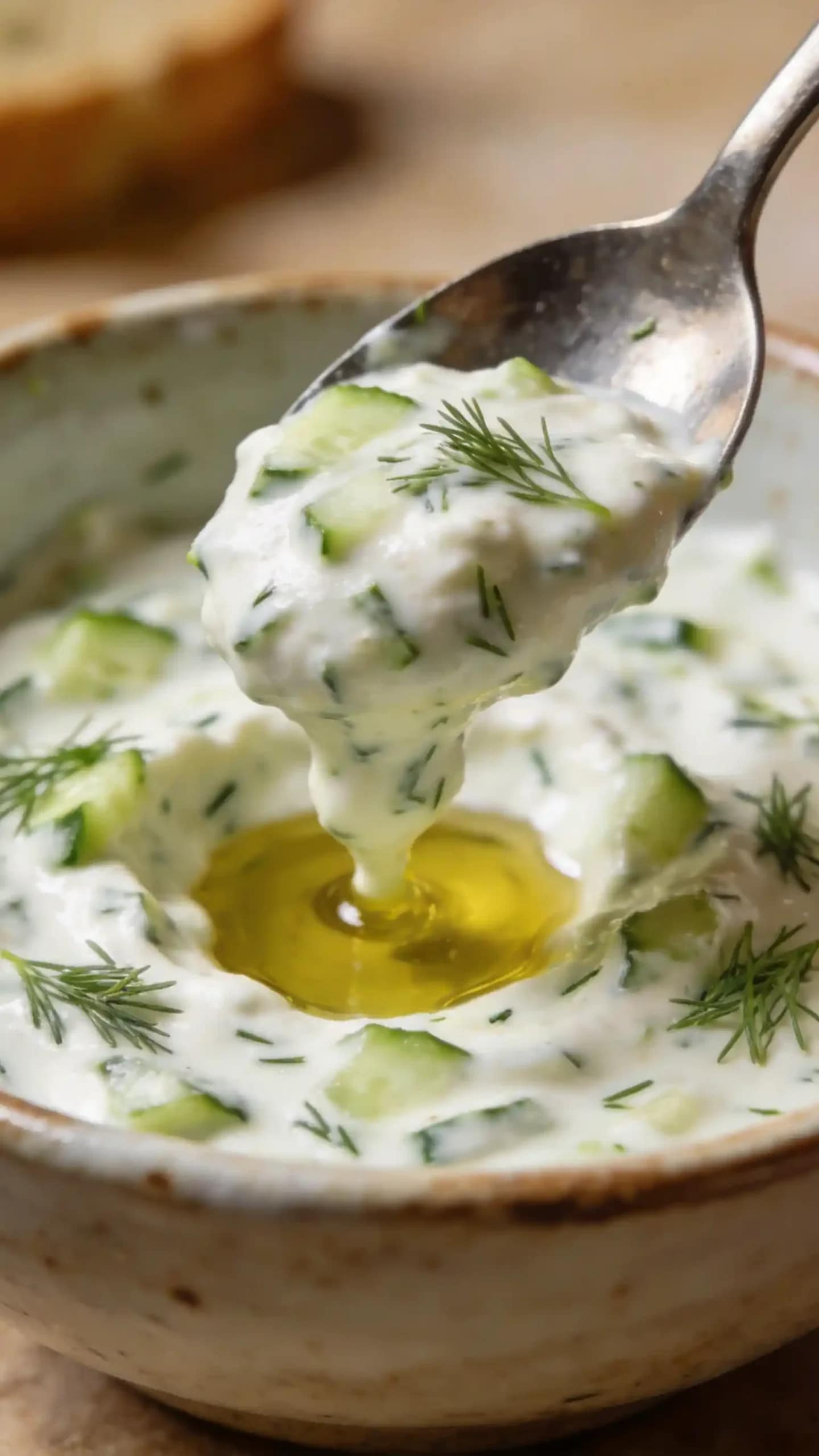
Add the squeezed cucumber, grated garlic, 2 tablespoons of fresh dill, and 1 tablespoon of fresh mint if using. Stir everything together gently but thoroughly until evenly combined. The mixture should look thick, flecked with green herbs and pale cucumber, and hold its shape on a spoon rather than flowing like a liquid.
Step Four: Season and Add Olive Oil
Add 2 tablespoons of fresh lemon juice, 1 tablespoon of extra virgin olive oil, 1/2 teaspoon of salt, and 1/4 teaspoon of black pepper to the bowl. Stir everything together until fully incorporated. The lemon juice adds brightness and acidity that lifts the whole sauce, while the olive oil adds a subtle richness and the smooth mouthfeel that defines authentic Mediterranean sauce recipes.
Taste the tzatziki at this point and adjust the seasoning before chilling. Add more salt if it tastes flat, more lemon if it needs brightness, or more garlic if you want a bolder flavor. FYI, tzatziki always tastes slightly less seasoned before chilling than it does after resting, since the salt draws out more flavor from the herbs and cucumber as it sits.
Step Five: Chill Before Serving
Cover the bowl tightly with plastic wrap and refrigerate for a minimum of 30 minutes before serving. This chilling period allows all the individual flavors to meld together into a cohesive sauce rather than tasting like separate ingredients mixed in a bowl. The garlic in particular softens and distributes more evenly throughout the yogurt during this rest.
IMO, tzatziki made 2 to 3 hours ahead always tastes better than tzatziki served immediately after mixing. If you can make it the day before you need it, the flavor development is genuinely noticeable and worth the extra planning.
Step Six: Garnish and Serve
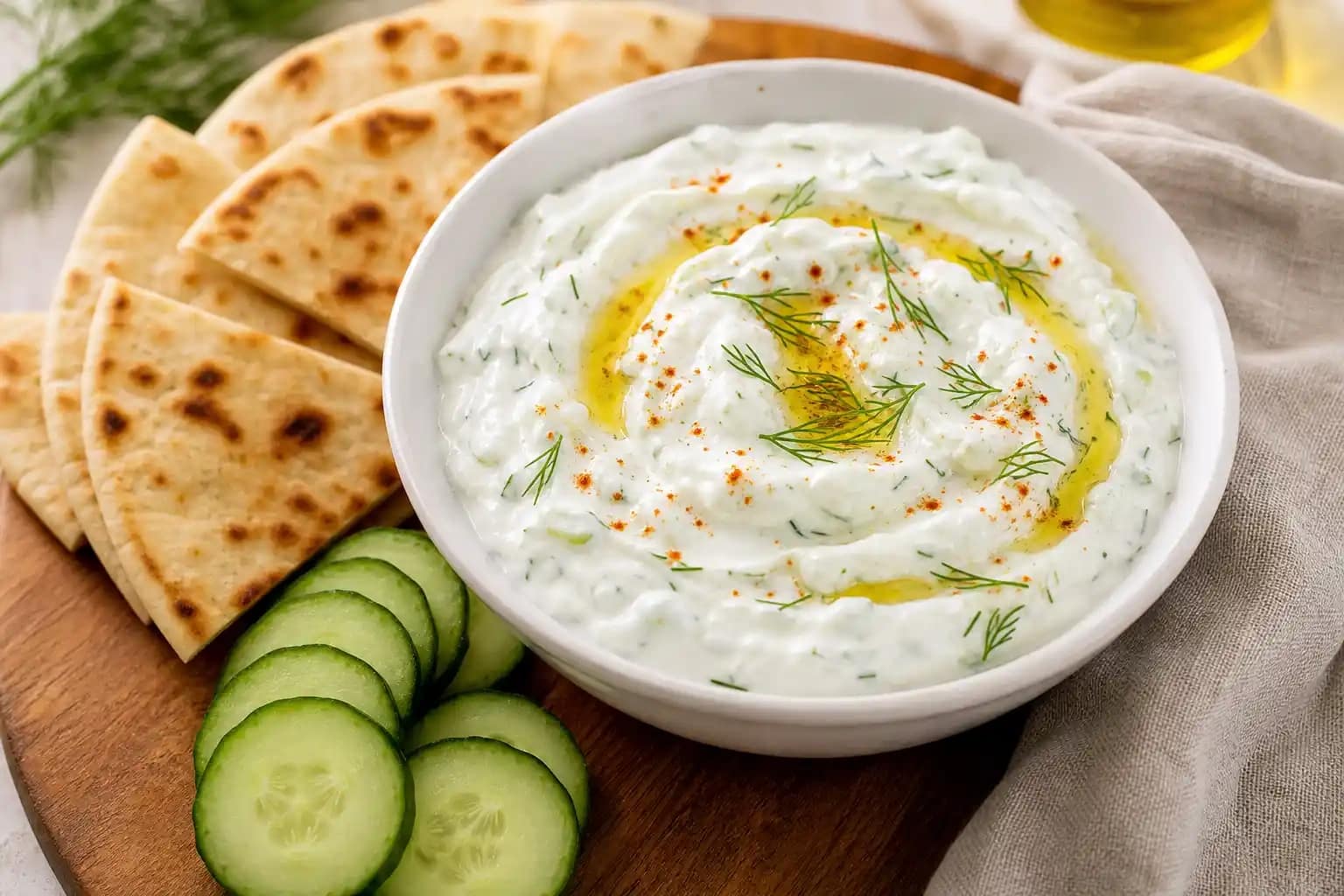
Transfer the chilled tzatziki to a serving bowl and create a slight swirl or well in the center using the back of a spoon. Drizzle about 1 teaspoon of extra virgin olive oil into the center, then add a few sprigs of fresh dill and a small pinch of paprika or sumac across the top. This simple garnish elevates the presentation from a bowl of white sauce into something that looks genuinely inviting and deliberately styled.
Serve immediately with warm pita bread, raw vegetables, grilled meats, or as a sauce inside a gyro sauce tzatziki bowl with rice, roasted vegetables, and your preferred protein. The sauce holds beautifully at room temperature for up to 2 hours during serving, then goes back in the fridge afterward.
Why Full-Fat Greek Yogurt Is Non-Negotiable
Have you ever made easy taziki sauce with low-fat yogurt and wondered why it turned out thin, watery, and slightly disappointing? The fat content in full-fat yogurt isn’t just a flavor thing, it’s a structural thing.
Full-fat Greek yogurt contains a significantly higher protein and fat ratio than reduced-fat versions, which gives it the thick, creamy body that holds the cucumber, garlic, and herbs in suspension without separating. Low-fat versions release their liquid faster, particularly after the salt draws moisture from the cucumber during chilling, which turns the sauce runny within a few hours.
How to Make a Lazy Tzatziki Sauce Version
Quick Assembly for Busy Days
For a truly lazy tzatziki sauce version when time is tight, skip the fresh herbs entirely and use 1 teaspoon of dried dill instead. Replace the fresh garlic with 1/2 teaspoon of garlic powder to avoid grating. The texture and freshness won’t match the full recipe, but it still produces a genuinely tasty, functional sauce in about 5 minutes flat.
This lazy shortcut works well for weekday lunches and impromptu gatherings where something on the table beats nothing at all. It’s not the version I’d serve at a dinner party, but it’s absolutely the one I make at 11pm when I need something good for tomorrow’s lunch bowl.
Building a Tzatziki Bowl
The Complete Assembly
Build a tzatziki bowl by starting with a base of warm rice or quinoa, adding sliced grilled chicken or falafel, then layering on diced tomatoes, sliced cucumber, red onion, and kalamata olives. Spoon a generous dollop of tzatziki over the top and finish with a drizzle of olive oil and a pinch of sumac.
This format turns a simple sauce into the centerpiece of a complete, nutritious, genuinely satisfying meal that covers everything from protein to vegetables to healthy tzatziki sauce as the dressing and flavor anchor.

Mediterranean Tzatziki Sauce From Scratch at Home
8
servings15
minutes39
minutesThis homemade tzatziki combines full-fat Greek yogurt with thoroughly drained grated cucumber, grated garlic, fresh dill, lemon juice, and olive oil, seasoned and chilled for at least 30 minutes before serving. Ready in 45 minutes with minimal active prep, it delivers a thick, creamy, authentic Mediterranean sauce every time.
Ingredients
For the tzatziki:
1 cup full-fat Greek yogurt
1 medium cucumber, about 1 cup grated
2 cloves garlic, minced or grated
2 tablespoons fresh dill, finely chopped
1 tablespoon fresh mint, finely chopped, optional
2 tablespoons fresh lemon juice
1 tablespoon extra virgin olive oil
1/2 teaspoon salt, plus more to taste
1/4 teaspoon black pepper
Optional garnish:
extra drizzle of olive oil
fresh dill sprigs
pinch of paprika or sumac
Directions
- Grate the cucumber coarsely using a box grater into a clean kitchen towel
- Squeeze the grated cucumber firmly over the sink for 30 to 45 seconds to remove excess moisture
- Mince or grate the garlic as finely as possible
- Add full-fat Greek yogurt to a medium mixing bowl
- Add the squeezed cucumber, grated garlic, fresh dill, and mint if using
- Stir gently until evenly combined
- Add fresh lemon juice, olive oil, salt, and black pepper
- Stir everything together until fully incorporated
- Taste and adjust salt, lemon, or garlic as needed
- Cover tightly with plastic wrap and refrigerate for at least 30 minutes
- Transfer to a serving bowl and create a swirl in the center
- Drizzle with olive oil and garnish with fresh dill and a pinch of paprika
- Serve with pita, vegetables, grilled meats, or as part of a tzatziki bowl
Common Mistakes to Avoid
Not squeezing the cucumber thoroughly: Under-squeezed cucumber releases its moisture into the yogurt within minutes and produces a watery, thin sauce that pools at the bottom of the serving bowl. Squeeze aggressively and squeeze twice if needed.
Using low-fat yogurt: The sauce turns runny, separates faster, and tastes noticeably less rich. Full-fat Greek yogurt is the only appropriate base for this recipe.
Skipping the chill time: Tzatziki served immediately after mixing tastes flat and unintegrated. The 30-minute minimum rest is doing real flavor work, not just keeping the sauce cold.
Using dried dill as the primary herb: Dried dill works in the lazy version but produces a noticeably less vibrant, more dusty flavor than fresh dill. Fresh herbs genuinely make this recipe.
FAQs
Q1: How long does homemade tzatziki sauce last in the fridge?
Store in an airtight container for up to 4 days. Stir well before each use since some liquid separation is normal after the first day. The flavor actually improves between day one and day two.
Q2: Can I make tzatziki without fresh dill?
Yes, fresh mint alone works as a substitute and produces a slightly different but equally refreshing flavor. Dried dill works in the lazy version but doesn’t match the brightness of fresh herbs in the full recipe.
Q3: What’s the difference between tzatziki and Greek yogurt dip?
Tzatziki specifically requires cucumber, garlic, dill, lemon, and olive oil in a Greek yogurt base. Plain Greek yogurt dips vary widely and don’t follow this specific formula. Tzatziki is a defined Mediterranean sauce with consistent traditional ingredients.
Q4: Can I freeze tzatziki?
Freezing isn’t recommended, since the yogurt separates and the cucumber releases additional water upon thawing, producing a grainy, liquid-heavy texture that doesn’t resemble the original sauce. Make it fresh or refrigerate for up to 4 days.
Q5: What do I serve with tzatziki besides pita?
Tzatziki works as a gyro sauce, a dipping sauce for raw vegetables, a spread inside sandwiches and wraps, a topping for grilled chicken or lamb, and the dressing component of a full tzatziki bowl with grains and roasted vegetables.
Q6: How do I know if I’ve added enough garlic?
Taste the sauce before chilling and it should taste slightly more garlicky than you want the final version to be, since garlic mellows considerably during the resting period. If it tastes right before chilling, it’ll taste mild and underwhelming by serving time.
Wrapping It Up
This home made tzatziki sauce delivers an authentic, genuinely superior result through thorough cucumber draining, proper full-fat Greek yogurt, grated rather than minced garlic, fresh herbs, and a minimum 30-minute chill before serving. Squeeze the cucumber completely, use full-fat yogurt, grate the garlic, season before chilling, and rest before serving. Those five habits produce a perfect result every time.
Whether you use it as how to make taziki sauce for gyros, build a full grain bowl around it, or just use it as a dip for vegetables at lunch, this sauce earns its place in your weekly routine. Now go squeeze that cucumber and get mixing.