Quick Pizza Sauce With Real San Marzano Tomatoes
I used to grab whatever canned pizza sauce was cheapest at the store. Then I made my own once, out of pure stubbornness, and genuinely could not go back. The jar tastes like a compromise now.
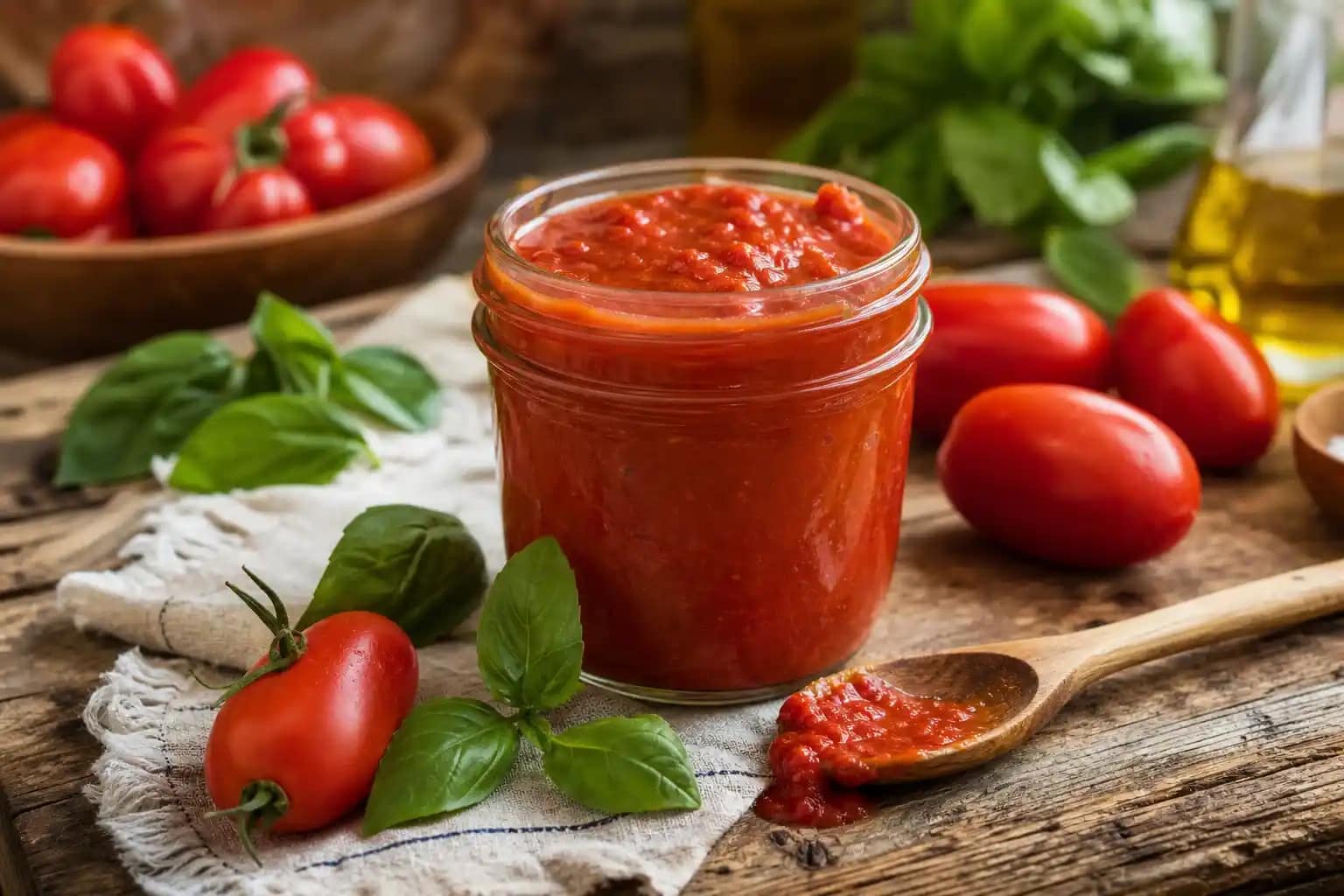
This pizza sauce recipe takes about 15 minutes, uses ingredients you likely already have, and tastes noticeably brighter and more authentic than anything from a can. You don’t even need to cook it if you don’t want to. That alone should tell you something about how simple this really is.
What You’ll Need (Ingredients)
Simple, real, and genuinely flexible depending on what’s already in your pantry.
For the pizza sauce:
- 1 can (28 ounces) crushed San Marzano tomatoes
- 2 tablespoons olive oil
- 3 cloves garlic, minced
- 1 teaspoon dried oregano
- 1/2 teaspoon dried basil
- 1/4 teaspoon red pepper flakes
- 1 teaspoon sugar
- 1 teaspoon salt, adjust to taste
- 1/4 teaspoon black pepper
- 2 tablespoons fresh basil, chopped, optional
Optional fresh tomato version:
- 2 pounds fresh ripe tomatoes, peeled and chopped
- Same seasonings as above
How to Make It — Full Step-by-Step Process
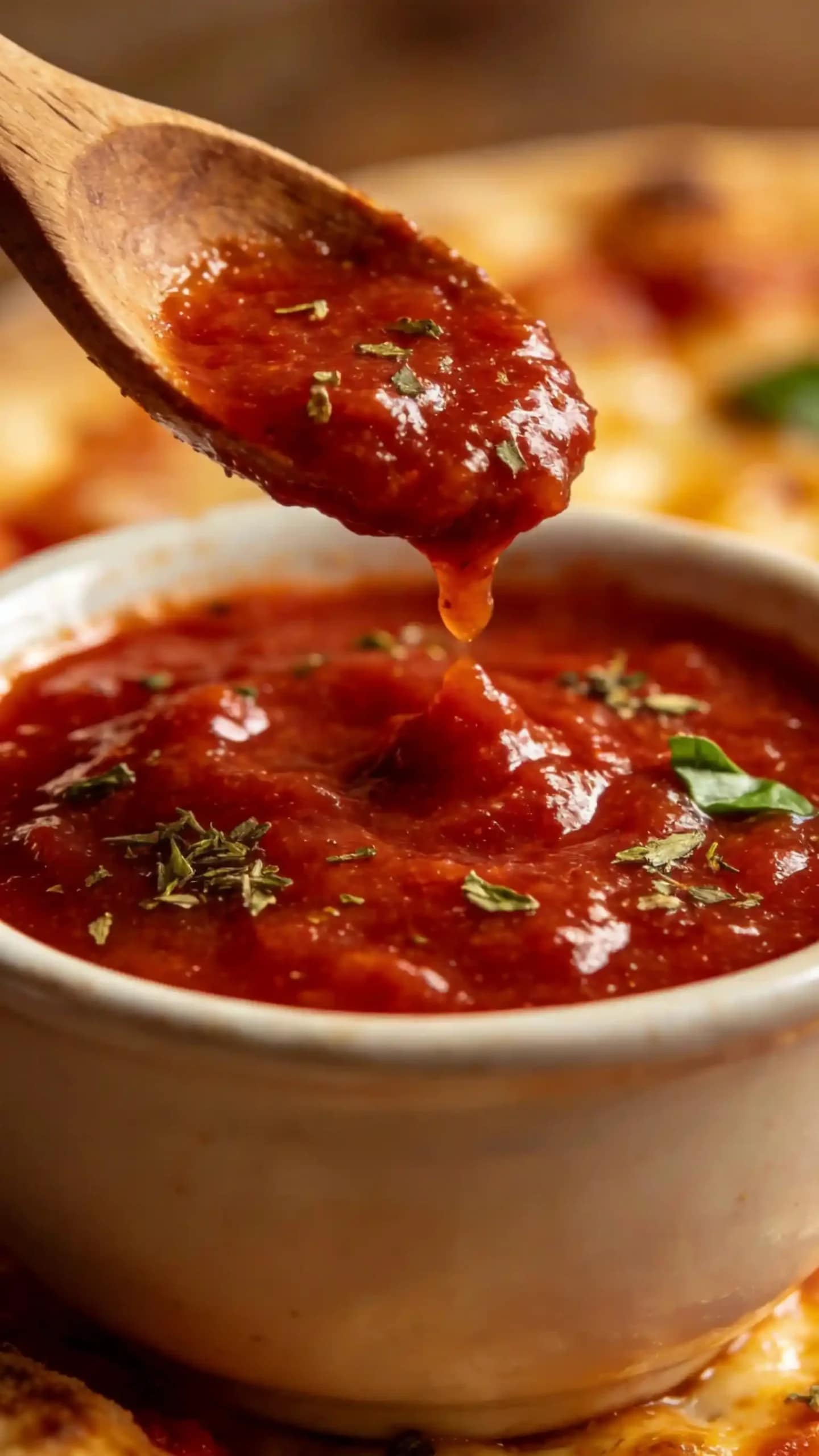
Step One: Choose Your Tomato Base
Pour the 28-ounce can of crushed San Marzano tomatoes into a medium mixing bowl. San Marzano tomatoes genuinely make a noticeable difference here, since they’re naturally sweeter and less acidic than standard canned tomatoes. Use the best canned tomato you can find, since this single ingredient carries most of the final flavor.
If you’d rather go the pizza sauce homemade fresh tomatoes route instead, blanch 2 pounds of ripe tomatoes in boiling water for 30 seconds, then transfer to ice water. The skins slip right off after that shock, and you can crush the tomatoes by hand or pulse them briefly in a food processor.
Step Two: Build the Garlic Base
Heat 2 tablespoons of olive oil in a small saucepan over medium-low heat. Add the 3 cloves of minced garlic and stir constantly for about 45 seconds, just until it turns fragrant but stays pale and soft. Garlic burns fast and turns bitter the moment it browns, so don’t step away here.
Have you ever added garlic too early and ended up with a burnt, acrid sauce? It ruins the whole pot instantly. Keeping the heat low and your attention on the pan for this short window genuinely matters more than almost any other step.
Step Three: Combine and Season
Pour the crushed tomatoes directly into the saucepan with the warm garlic oil. Add 1 teaspoon of dried oregano, 1/2 teaspoon of dried basil, 1/4 teaspoon of red pepper flakes, 1 teaspoon of sugar, 1 teaspoon of salt, and 1/4 teaspoon of black pepper. Stir everything together until fully combined.
This blend genuinely works as a complete pizza seasoning recipe baked right into the sauce itself, so you don’t need to season your dough or toppings as heavily later. The sugar isn’t there to make it sweet, it’s there to balance out the natural acidity of the tomatoes.
Step Four: Simmer for Depth, or Skip It Entirely
If you want a deeper, more developed flavor, let the sauce simmer gently over low heat for 15 to 20 minutes, stirring occasionally. This reduces the sauce slightly and melds all the seasonings together into something that tastes like it cooked far longer than it actually did.
If you’re short on time, skip the simmering entirely and use the sauce raw, straight after mixing. This quick pizza sauce method works because crushed San Marzano tomatoes already taste vibrant and balanced on their own, and the heat from your pizza oven finishes cooking the sauce anyway once it’s on the dough.
Step Five: Adjust and Finish
Taste the sauce once it’s fully combined or finished simmering, and adjust the salt and red pepper flakes to your preference. Every batch of canned tomatoes varies slightly in acidity and saltiness, so this taste-test step matters more than blindly following exact measurements. Stir in 2 tablespoons of chopped fresh basil at the very end if using, since fresh herbs lose their brightness fast if added too early.
Let the sauce cool to room temperature before spreading it on pizza dough, since hot sauce can start cooking the dough prematurely and affect the final texture. Store any leftover sauce in an airtight container in the fridge if you’re not using it immediately.
Canned vs Fresh Tomatoes: Which Wins?
Have you ever wondered why so many serious pizza makers swear by canned tomatoes over fresh ones? It genuinely comes down to consistency and concentration of flavor.
Canned San Marzano tomatoes are picked and processed at peak ripeness, which means every single can delivers reliable sweetness and acidity regardless of season. Fresh tomatoes vary wildly depending on variety, ripeness, and time of year, and out-of-season fresh tomatoes often taste watery and bland by comparison. IMO, unless you’re working with genuinely ripe summer tomatoes from a garden or farmers market, canned wins for pizza sauce nearly every time.
Making It Authentic Italian Style
What Makes Authentic Italian Pizza Sauce Different
Authentic Italian pizza sauce stays remarkably simple compared to thick, heavily seasoned American-style versions. Traditional Neapolitan pizza sauce often uses nothing more than crushed tomatoes, salt, and a drizzle of olive oil, letting the quality of the tomato speak entirely for itself.
If you want to lean into that minimalist authentic Italian pizza sauce direction, skip the oregano and red pepper flakes entirely and add fresh basil leaves directly to the pizza after baking instead of into the sauce itself. This approach trusts the tomato completely, and honestly, with good San Marzano tomatoes, that trust is well placed.
Using This Sauce Beyond Pizza
Pizza Dipping Sauce
This same sauce works brilliantly as a pizza dipping sauce for breadsticks, garlic knots, or mozzarella sticks. Warm it slightly before serving for dipping purposes, since cold sauce doesn’t pair as well with hot, freshly baked bread.
Home Made Pizza Toppings Pairing
Pair this sauce with simple home made pizza toppings like fresh mozzarella, basil, and a drizzle of olive oil for a classic Margherita. The sauce’s bright, balanced flavor works as a strong base regardless of what you pile on top of it.
Common Mistakes to Avoid
Using watery, low-quality canned tomatoes: Cheap tomatoes produce a thin, bland sauce no matter how well you season it. Spend the extra dollar or two on a quality San Marzano can.
Burning the garlic: This turns the entire batch bitter instantly and cannot be fixed once it happens. Keep the heat low and stir constantly during that short garlic stage.
Adding fresh basil too early: Fresh herbs lose their bright flavor and turn dull when cooked too long. Stir them in at the very end, right before the sauce goes onto the dough.
Over-seasoning before tasting: Canned tomato brands vary significantly in salt content already. Always taste before adding extra salt rather than guessing blindly.

Quick Pizza Sauce With Real San Marzano Tomatoes
2
Cups10
minutes5
minutesThis pizza sauce recipe combines crushed San Marzano tomatoes with garlic, oregano, basil, and a touch of sugar for balance, ready in just 15 minutes with no cooking required. Bright, authentic, and far better than anything from a jar, it works as the perfect base for any homemade pizza night.
Ingredients
For the pizza sauce:
1 can (28 ounces) crushed San Marzano tomatoes
2 tablespoons olive oil
3 cloves garlic, minced
1 teaspoon dried oregano
1/2 teaspoon dried basil
1/4 teaspoon red pepper flakes
1 teaspoon sugar
1 teaspoon salt, adjust to taste
1/4 teaspoon black pepper
2 tablespoons fresh basil, chopped, optional
Optional fresh tomato version:
2 pounds fresh ripe tomatoes, peeled and chopped
Same seasonings as above
Directions
- Pour crushed San Marzano tomatoes into a mixing bowl, or blanch and peel fresh tomatoes if using that version
- Heat olive oil in a small saucepan over medium-low heat
- Add minced garlic and stir constantly for about 45 seconds until fragrant but not browned
- Pour the crushed tomatoes into the saucepan with the garlic oil
- Add oregano, dried basil, red pepper flakes, sugar, salt, and black pepper, then stir to combine
- Simmer gently for 15 to 20 minutes for deeper flavor, or skip simmering and use raw
- Taste and adjust salt and red pepper flakes as needed
- Stir in fresh basil at the very end if using
- Let the sauce cool to room temperature before spreading on pizza dough
- Store leftover sauce in an airtight container in the fridge
FAQs
Q1: Is this better than canned pizza sauce from the store?
Homemade sauce generally tastes fresher and brighter, with more control over salt and seasoning levels. Store-bought canned pizza sauce works in a pinch, but it often tastes flatter and more processed by comparison.
Q2: Do I need to cook the pizza sauce before using it?
No, raw sauce works perfectly well since the pizza oven finishes cooking it once assembled. Simmering simply deepens the flavor slightly if you have the extra 15 to 20 minutes to spare.
Q3: How long does homemade pizza sauce last in the fridge?
Properly stored in an airtight container, it keeps well for up to 5 days in the refrigerator. For longer storage, freeze it in small portions for up to 3 months.
Q4: Can I use tomato paste instead of crushed tomatoes?
Tomato paste works in a pinch if diluted with water, but it produces a noticeably different, more concentrated flavor and thicker texture. Crushed whole tomatoes genuinely give the best, most balanced result for authentic pizza sauce.
Q5: What’s the best homemade pizza sauce to oregano ratio?
One teaspoon of dried oregano per 28-ounce can of tomatoes hits a good balance without overwhelming the tomato flavor. Adjust slightly upward if you prefer a more herb-forward, classic pizzeria taste.
Q6: Can I make a big batch and freeze it?
Yes, this recipe doubles or triples easily for batch cooking. Freeze in ice cube trays for small, pizza-night-sized portions, then transfer the frozen cubes to a freezer bag once solid.
Wrapping It Up
This pizza sauce recipe takes 15 minutes and genuinely outperforms anything from a jar in both flavor and freshness. Choose quality canned tomatoes, don’t rush or skip the garlic step, season thoughtfully, and taste before serving. Those habits separate forgettable sauce from the kind people specifically notice and ask about.
Whether you simmer it low and slow or use it raw straight from the bowl, this sauce earns its place as the base of seriously good homemade pizza. Now go grab that can of tomatoes and get stirring.